






Election Scams: Rising Voter Registration Scams and Political Donation Scams Ahead of Midterm Election
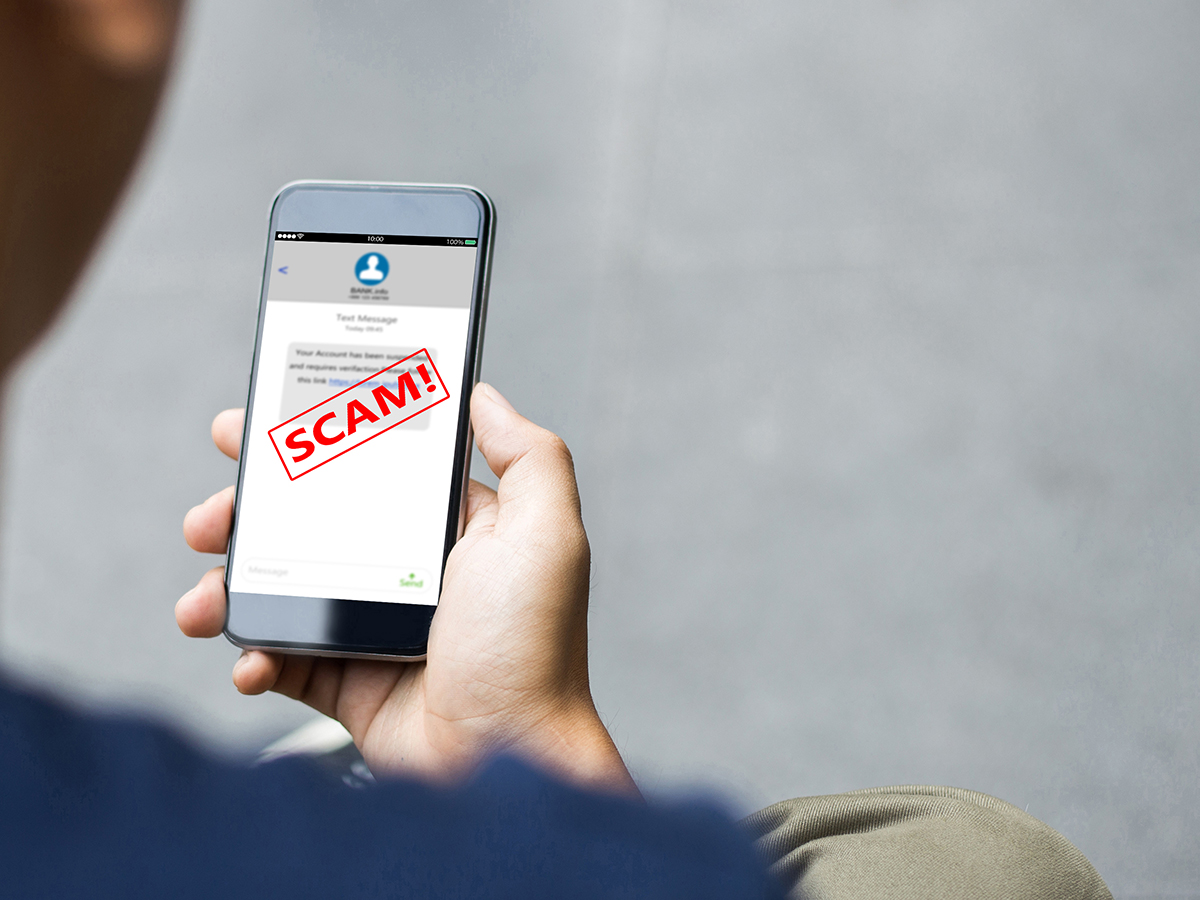
On November 3, 2026, Americans will head to the polls for the midterm general election. With all 345 seats in the House of Representatives and 35 seats in the Senate up for grabs, voters can expect a steady increase in campaign-related calls, texts and emails leading up to Election Day. Scammers know this surge in political outreach can make fraudulent messages harder to spot, using the moment to impersonate officials, spread false information, push political text scams or pressure people into sharing personal and financial details.
Voter Registration Scams: How Fraudsters Use Fake Election Updates to Steal Personal Information
A voter registration scam is a common way for fraudsters to collect personal information. These scams may come through phone calls, texts or emails that appear to be from election officials. The message may claim that your registration needs to be updated, that your information is incomplete or that you must provide details such as your social security number to remain eligible to vote. Some scammers may even say there is a fee to update your registration, which is not true in any jurisdiction.
Official voter registration information typically comes by mail from your local election office and includes your polling location and hours. If you need to update your information, do so in person or by visiting a trusted government website that ends in “.gov” directly.
Political Donation Scams: Warning Signs of Phony Fundraising Requests and Aggressive Outreach
Political donation scams can also be difficult to identify, especially as imposters use more convincing tactics to sound legitimate. Some scammers create phony charities or political fundraising messages, while others use AI-generated audio or messaging to impersonate candidates and campaigns. These requests often create urgency, ask for sensitive information or demand payment through methods such as cryptocurrency or gift cards. Calls that are aggressive, harassing or vague about who is contacting you are also red flags.
If you choose to donate to a candidate or campaign, pause before responding to any unsolicited request. Research the organization, avoid links sent by unknown phone numbers and go directly to the candidate’s official website to confirm you are donating through the correct campaign fund.
If you determine an election message you received seems suspicious, report to the FCC , delete and share warnings with your friends and family.
TNS Call Guardian® delivers industry-leading reputation profiling to identify call spoofing and unwanted robocalls in real time, helping Communications Service Providers (CSPs) protect consumers from election scams. Analyzing more than 1.9 billion call events each day and leveraging Do Not Originate (DNO), unallocated, invalid and unassigned numbers alongside STIR/SHAKEN and advanced analytics, it helps detect and stop suspicious calls or texts from reaching consumers.
TNS Branding and Call Authentication Suite helps enterprises increase customer trust, improve outbound communication performance and reduce fraud and impersonation risk while protecting brand integrity and enabling more effective, verified and recognized customer connections. This comprehensive suite of products includes: Spoof Protection, TNS Enterprise Branded Calling and Telephone Number Reputation Monitoring. Together, they secure identity, establish recognizable branding and provide visibility into how calls are labeled. This creates a complete framework for trusted outbound communications across the enterprise.









































Ready to Learn More?
Discover more about how TNS robocall protection services help your subscribers and expand your network.
Robocall Heatmap
Discover which scams are most prominent across the US in our nationwide heatmap that plots the state-by-state picture of scams on a monthly basis throughout 2026-2027.

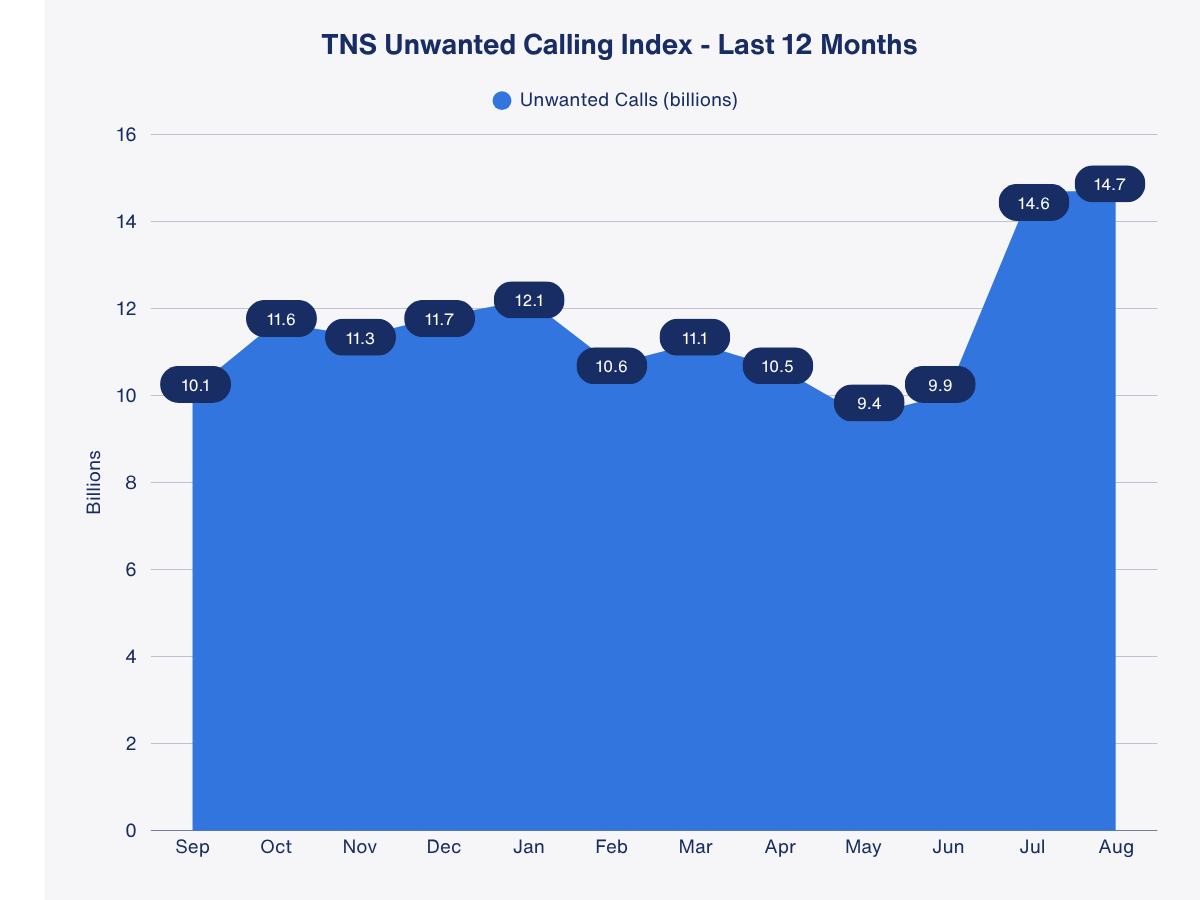
Unwanted Calls Nationwide Snapshot
TNS estimates that more than 93 billion unwanted calls were made in the last 12 months representing a 1% decrease over the last 12 months versus the previous 12 months. Unwanted calls increased 1% from July to August at 14.7B. This represents a 45% increase from August 2025 to August 2026.
Unwanted calls are comprised of nuisance calls and high-risk calls. The severity of harm of nuisance calls are moderate. The severity of harm for high-risk calls is deemed as a major invasion of privacy that can cause emotional distress.
TNS Heatmap of Originating Unwanted Calls
Top Area Codes for Generating Unwanted Calls
|
Top Area Codes for Generating Unwanted Calls
|
||||||||||||||||||||||||||||||||||||||||||||||||||||||||||||||||||||||||||||||||||||||||
|
|
TNS Unwanted Call Indices
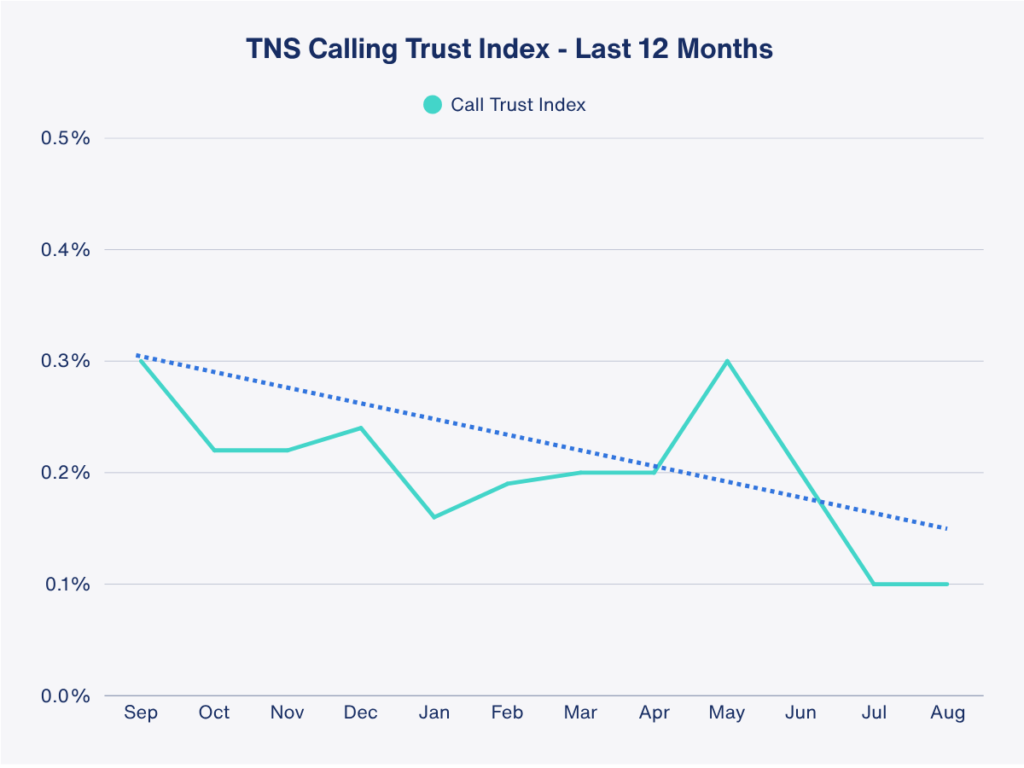
TNS Calling Trust Index is a measure of the crowd-source feedback for the unwanted calls that TNS receives in relation to the total number of calls to a subscriber. The index gives an indication of the consumer trust in voice calling and pulls data from our robocall protection platform TNS Call Guardian®. |
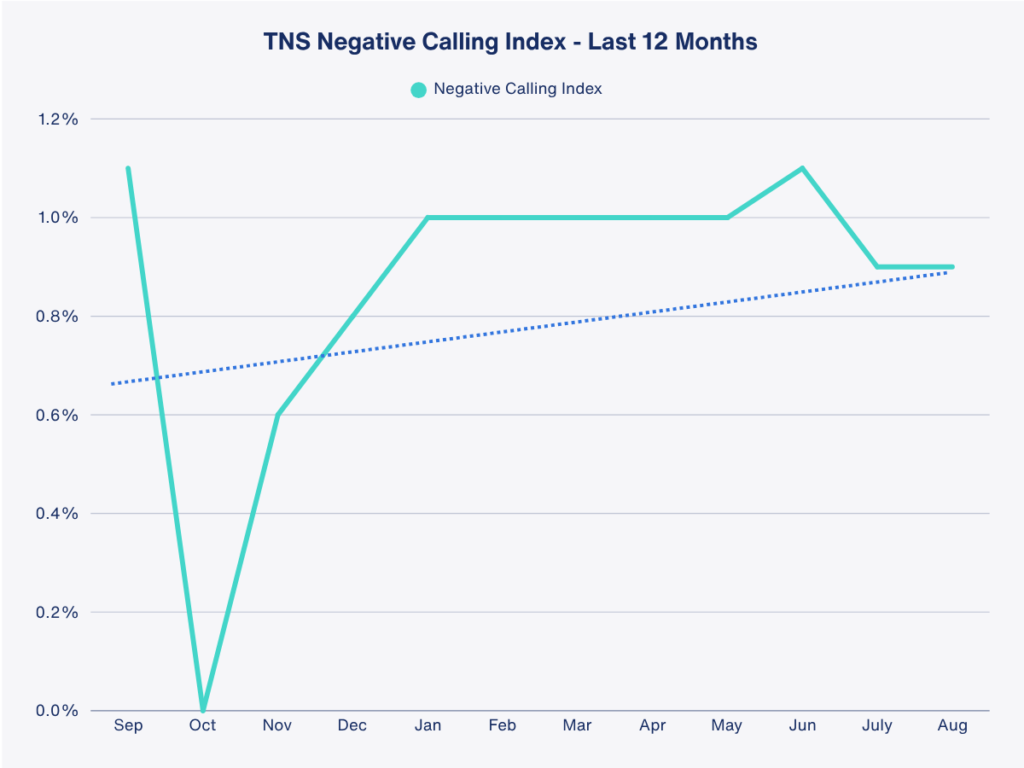
Complaint Index is a measure of the FCC complaints for the Do-Not-Call List in relation to the total number of unwanted calls seen by TNS. The index gives an indication to how many consumers are reporting complaints to the FCC relative to the number of unwanted robocalls they receive. |
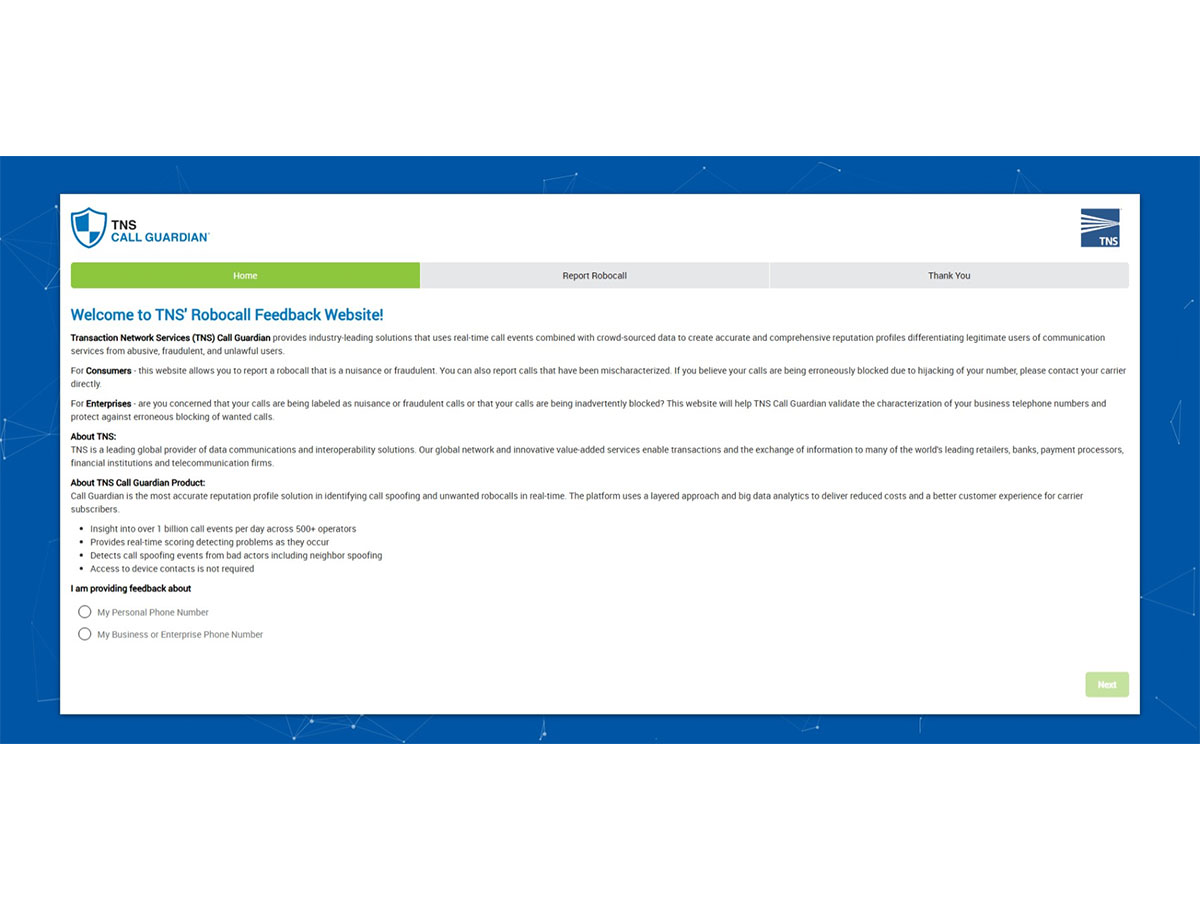
Take Action for Robocall Protection, go to: ReportARobocall.com
TNS Call Guardian uses real-time call events combined with crowd-sourced data to create accurate and comprehensive reputation profiles differentiating legitimate users from abusive, fraudulent and unlawful ones. Reporting robocall incidents adds important data making our solutions more robust.
Contact Us
Contact TNS to learn more about how our robocall protection services enhance your reputation and expand your business.
Related Resources

Recent Awards