





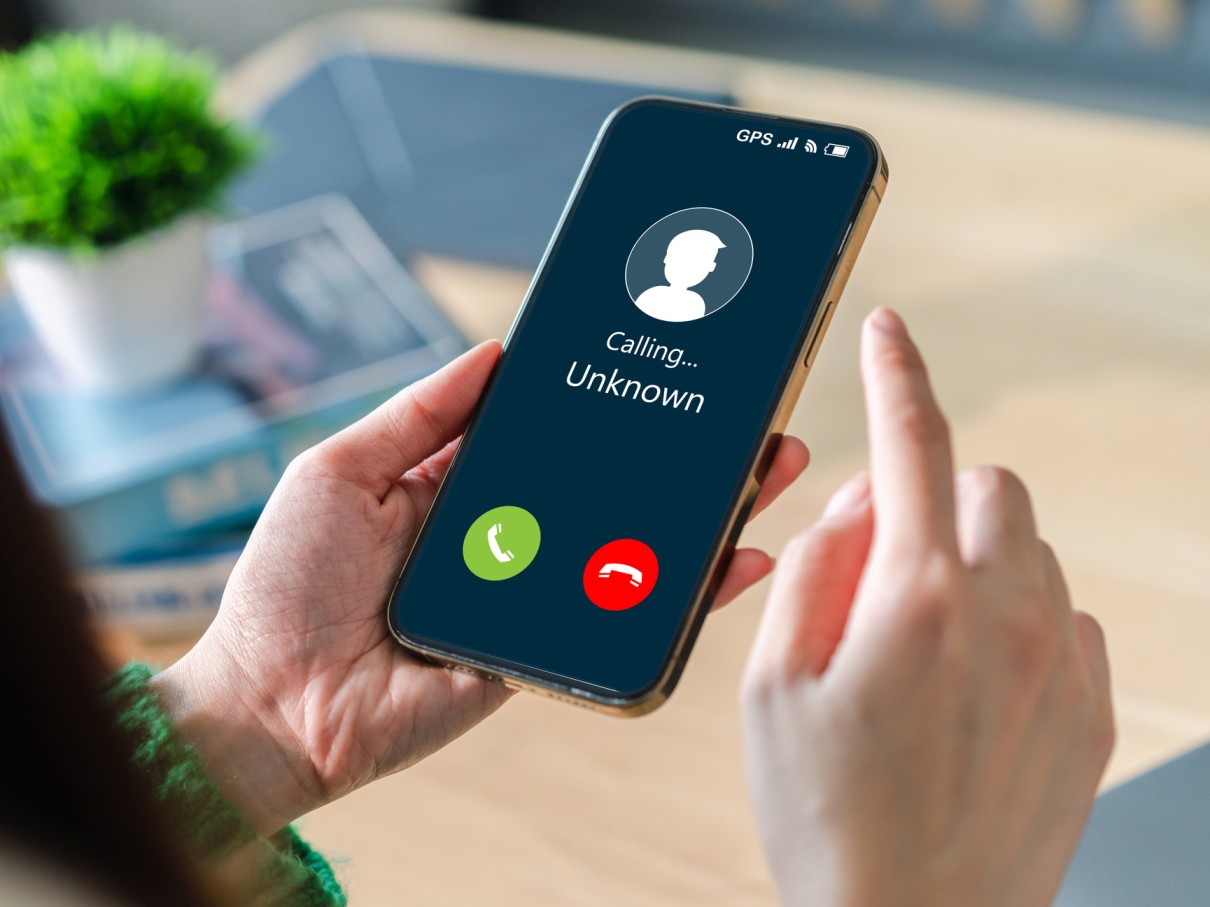
Caller ID revolutionized the telecommunications industry by allowing call recipients to know who is calling before answering.
For enterprises, caller ID invented the opportunity to build trust and engagement with their customers. As technology advanced, scammers adapted with tactics such as telephone number spoofing, scam calls and robocalls to defraud consumers.
Who Invented Caller ID?
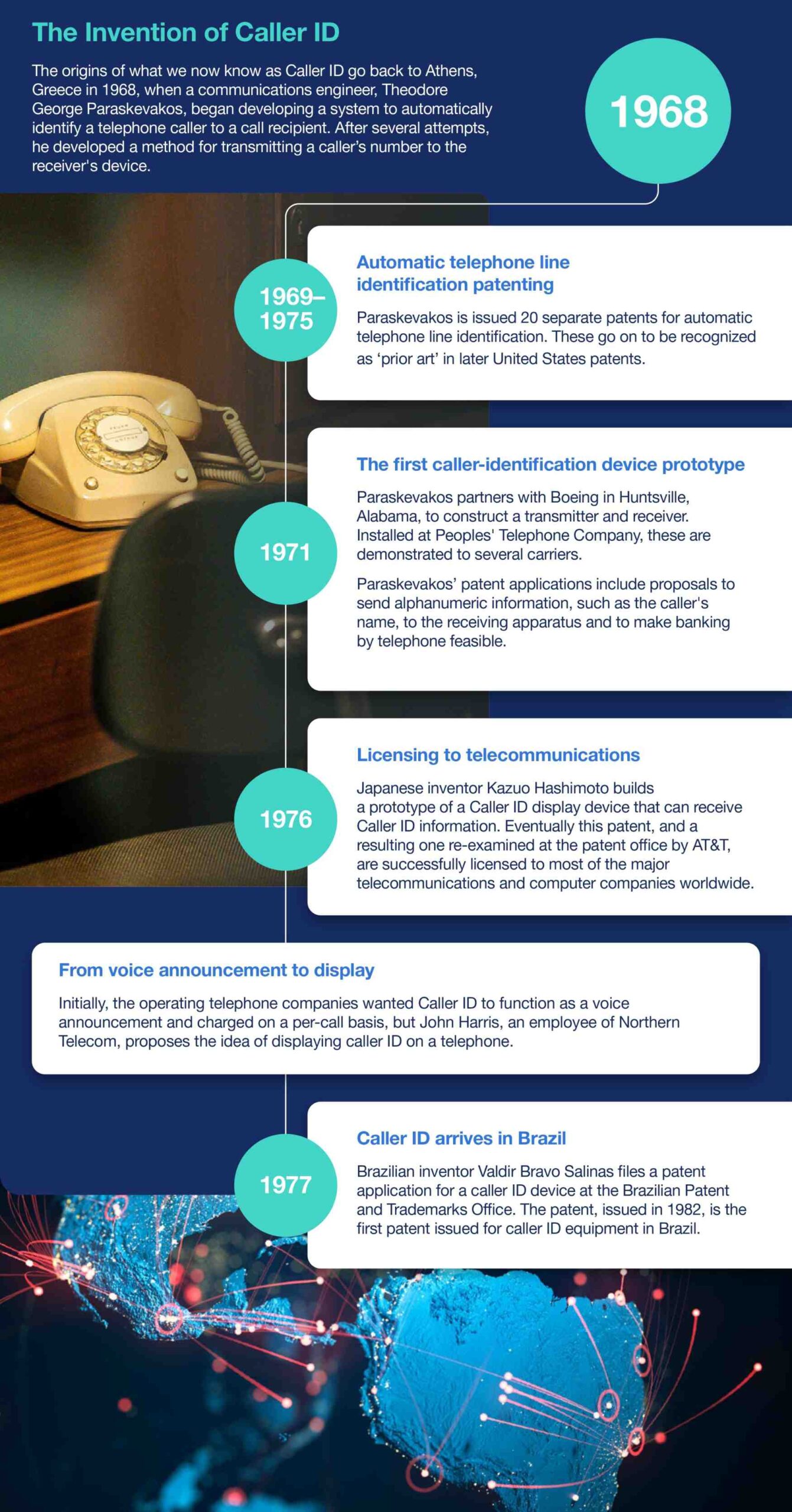
The first technical ideas for transmitting caller information over telephone lines emerged in the late 1960s. Theodore G. Paraskevakos is credited with conceiving and patenting early systems for automatic telephone line identification.
Paraskevakos developed prototypes and filed patents in the early 1970s describing how to send numeric information over voice circuits, creating the legal and technical foundation for later services.
Other engineers refined caller display hardware and practical implementations. Kazuo Hashimoto and Bell Labs researchers developed prototypes and components that moved Paraskevakos’s concepts toward consumer products.
These combined efforts paved the way for caller ID systems and the technology’s subsequent advances.
Caller ID Was Invented in the Late 1960s
How Does Caller ID Work
Caller ID transmits caller information as data between the originating exchange (caller) and the terminating device (recipient).
On traditional landlines, Frequency Shift Keying (FSK) signaling is typically used. The calling exchange encodes the caller’s number into audio-frequency tones and sends them during the silent interval between the first and second rings. The receiving device decodes those tones and displays the number.
Modern systems add a name lookup step known as CNAM where a database is queried to map a number to a display name.
For VoIP and IP based networks the signaling is carried in digital packets, often using SIP headers or in network databases rather than FSK audio tones.
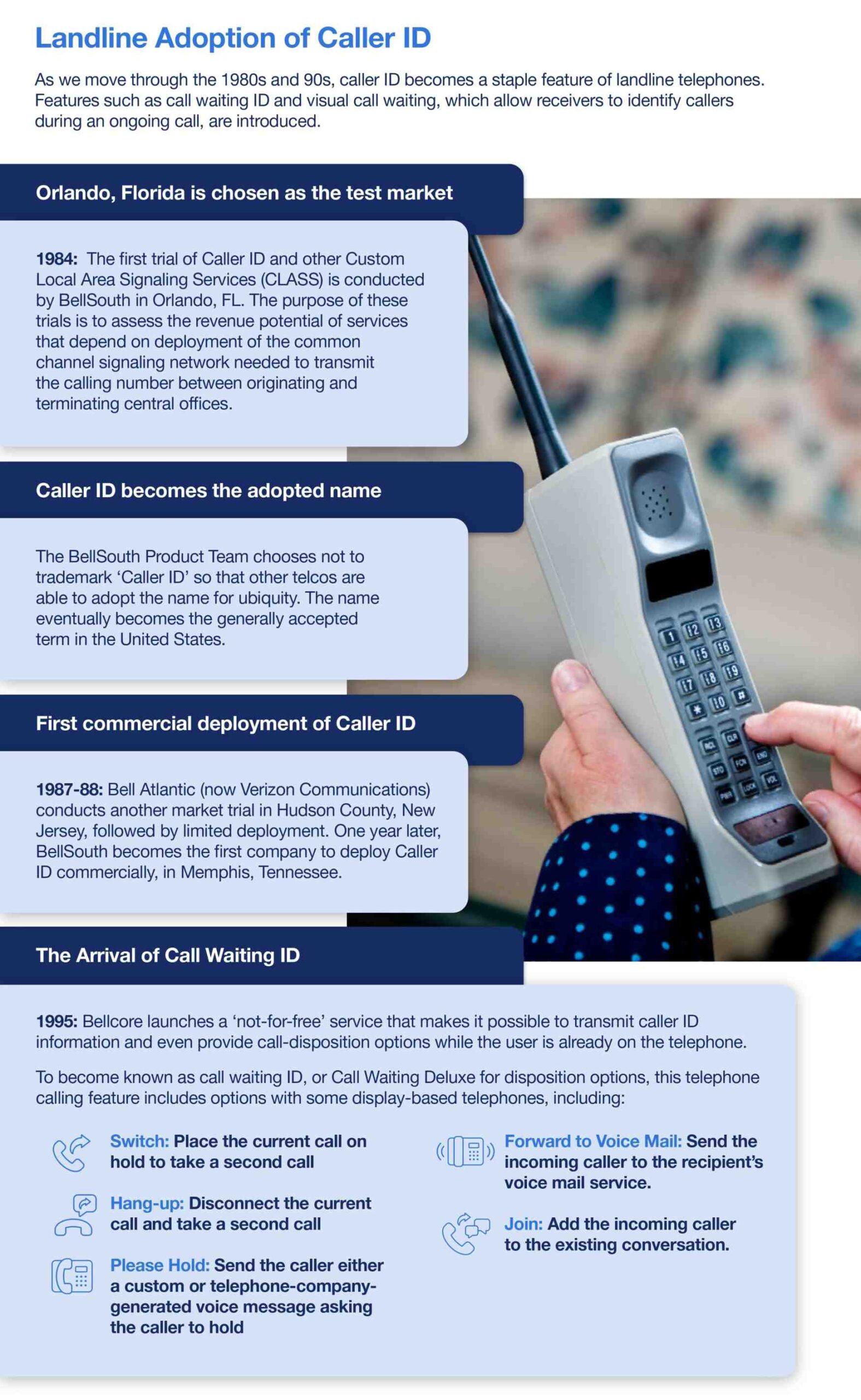
Caller ID Landline Adoption
Caller ID for Cell Phones and Beyond
Caller ID for landlines typically uses FSK and CNAM lookups, while caller ID for cell phones is embedded within cellular signaling and presents on the incoming call screen.
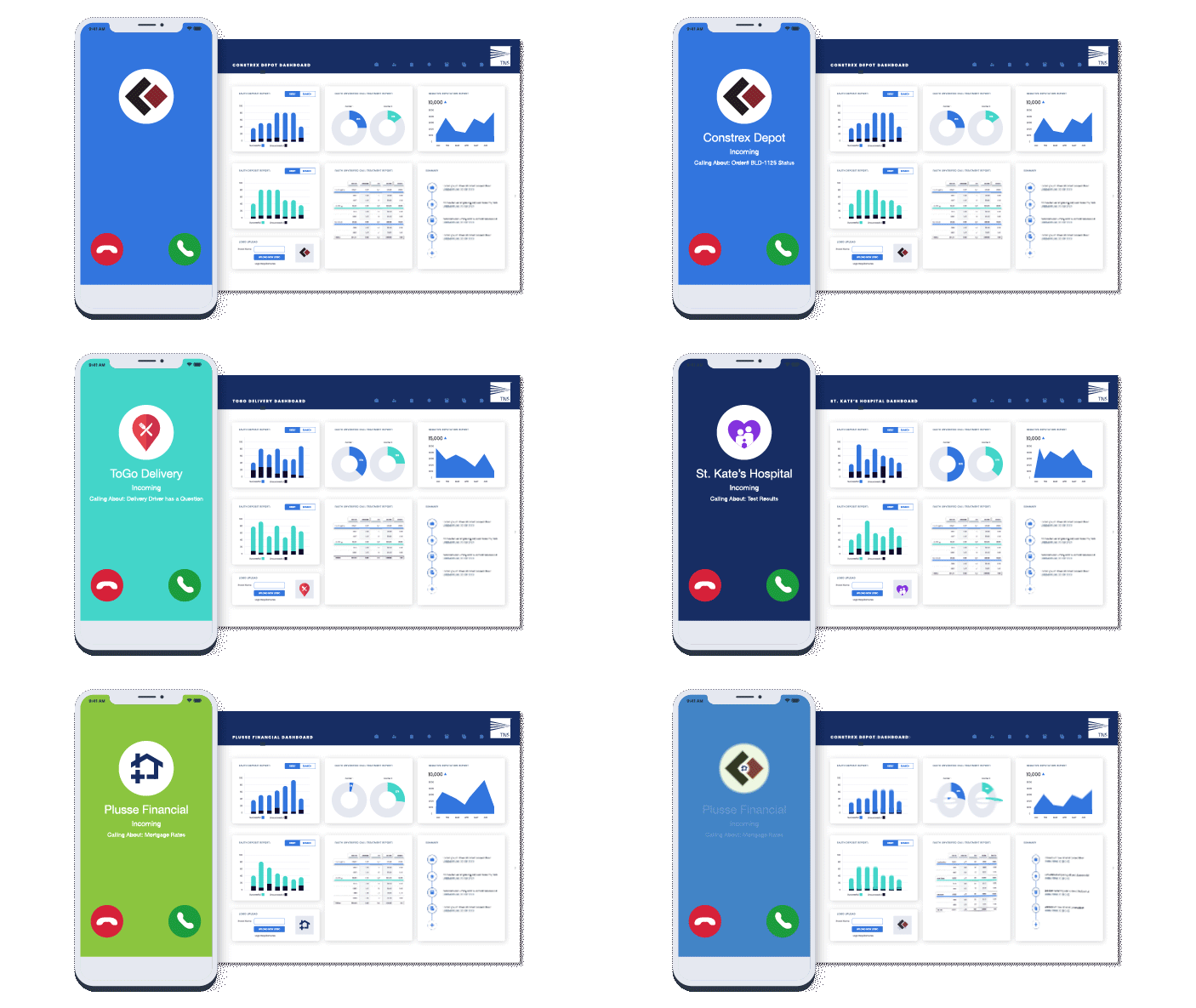
Smartphones can enhance caller ID with branded calling, contact matching, spam scoring and metadata from third-party apps and services.
VoIP systems manage caller ID via SIP or proprietary signaling, often integrating cloud databases to provide both number and name. Each network type has unique failure modes:
- FSK may be blocked by line noise
- Mobile delivery may depend on handset settings or routing
- VoIP requires correct SIP headers and accurate database entries
How Caller ID Works for Enterprises
Caller ID gave enterprises new ways to boost customer engagement – recognizable numbers made people more likely to answer and interact.
In addition to helping increase answer rates and trust, caller ID and branded calling solutions can:
- Reduce average call handling time and enable faster identification of high-value customers
- Integrate with CRM systems, allowing for automatic screen pop-ups of customer records when a call arrives
- Improve first-call resolution and personalization
Caller ID Implementation
To take advantage of the full benefits of caller ID and branded calling, a branded calling strategy needs to be implemented with a clear set of priorities, such as:
- Correct provisioning
- Accurate display name feeds
- Secure SIP handling
For customer service teams, optimizing agent workflows with caller ID improves outbound call performance. ROI can be quantified through reduced handling times, higher contact rates and fewer abandoned calls.
Caller ID Spoofing Protection
Caller ID spoofing are significant problems as bad actors falsify caller information to deceive recipients.
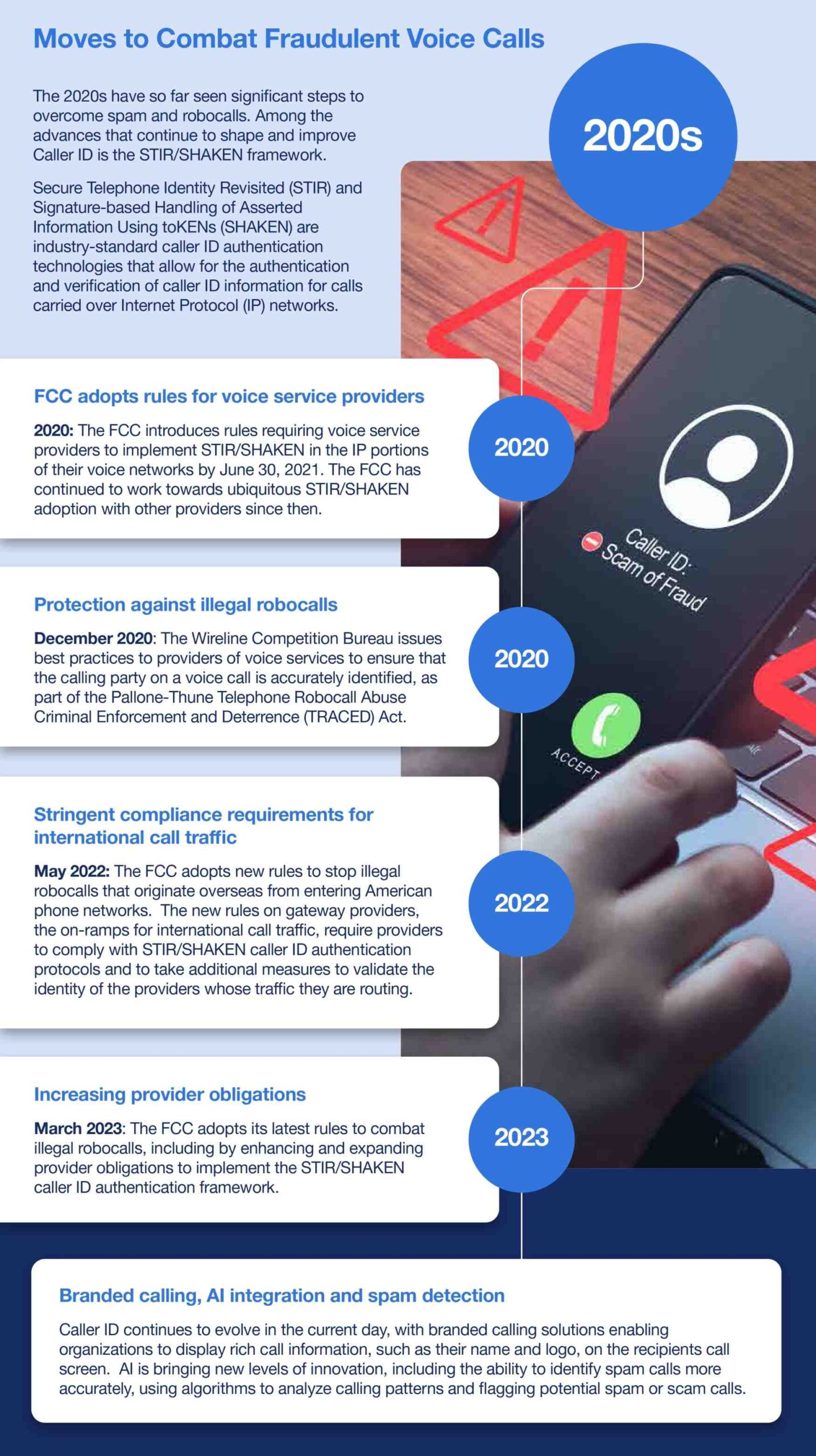
Throughout the 2020’s, the US government and telecommunications industry introduced countermeasures such as policy, carrier policing and technical standards. The STIR/SHAKEN framework authenticates calling party identity in SIP networks by attaching digital attestations to call signaling, reducing the effectiveness of spoofing on networks where it is deployed.
Caller ID spoof protection solutions, paired with branded calling solutions, provided customers with extra protection layers from bad actors –increasing consumer trust in the enterprises they engage with. Not only can they be assured that they are answering a legitimate phone call, but that fraudulent ones are being blocked from ever reaching them.
Caller ID Case Studies
Examples of how caller ID solutions such as branded calling work with spoof protection include:
- TNS Enterprise Branded Calling helped Verizon increase answer rates by 25%, after the solution was deployed following a spoof attack, The telecom giant also rolled out TNS Enterprise Authentication to validate if a call originates from its identified number; when it doesn’t, the call is immediately blocked from going through.
- A major US bank saw up to 94% increase in answers rates with TNS Enterprise Branded Calling and blocked more than 13,000 scam calls in the first few month with TNS Enterprise Authentication and Spoof Protection. They deployed TNS solutions after falling victim to a large-scale phishing attack that impacted millions of customers.
The Future of Caller ID
As telecommunications technology evolves, caller ID for cell phones, smartphones and landlines will likely take advantage of new technologies – deeper integration between caller identity and AI-driven analytics, offer predictive routing, intent signals and automated prioritization.
Privacy regulation and continued rollout of authentication frameworks will shape how telephone ID evolves. To stay ahead and compliant, businesses should regularly audit their current caller ID integrations, verify display names and SIP handling accuracy, and evaluate vendors that provide branded ID and anti-spoofing services.
Jim Tyrrell is Vice President of Global Product Strategy at TNS with specific responsibility for TNS’ Communications Market.
Discover TNS’ Branded Calling and Enterprise Solutions
Learn how the TNS can help to improve your inbound and outbound calling operations and protect your business and customers