


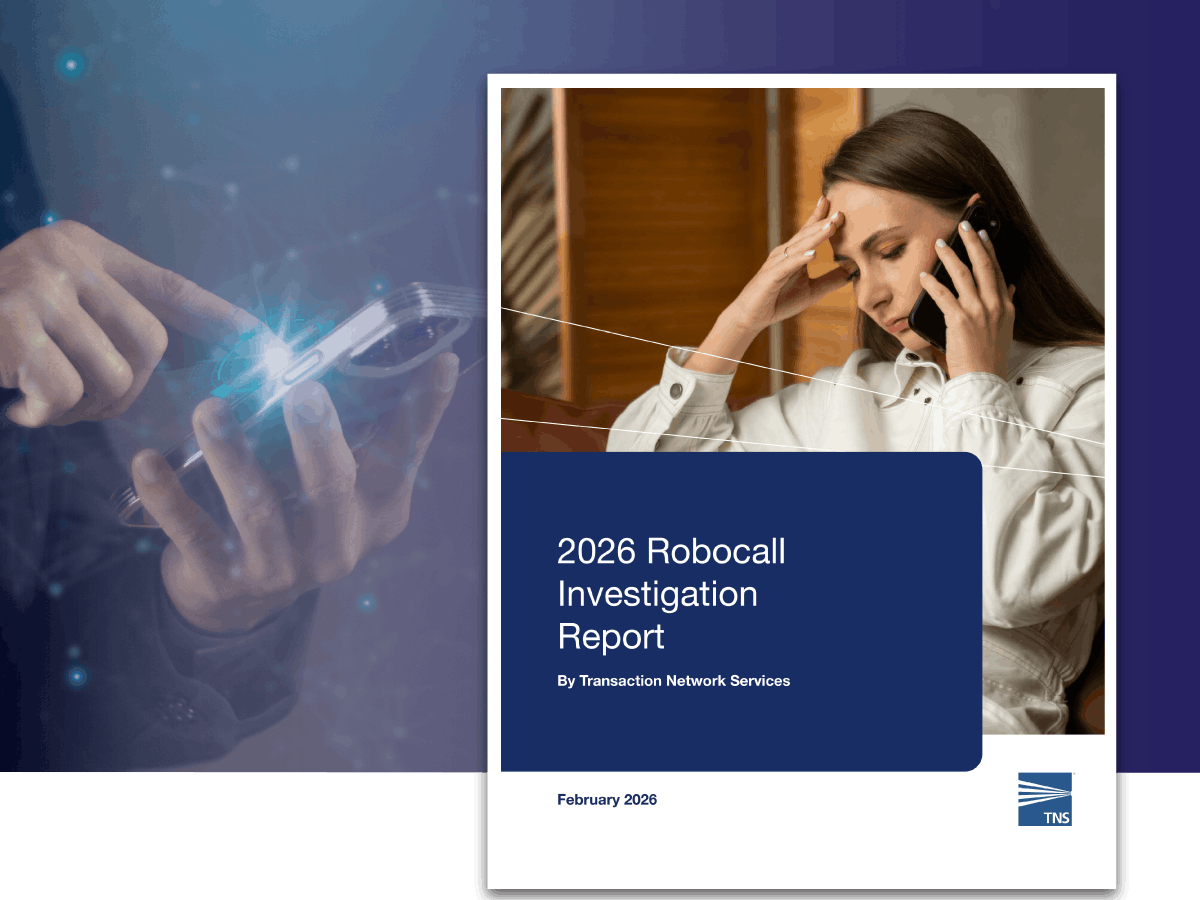






Telecom fraud became one of the most significant threats facing global communications networks in 2025.
According to new data from the latest Communications Fraud Control Association (CFCA) Fraud Loss Survey Report, losses tied to telecommunications fraud continue to accelerate. In 2023, the CFCA reported $38.95 billion lost in telecommunications fraud to schemes such as International Revenue Share Fraud (IRSF), Wangiri attacks, smishing, and number spoofing. By 2025, global losses climbed to $41.82 billion, nearly a $3 billion increase in just two years.
As bad actors increasingly use generative AI to enhance the realism of voice and text fraud, these scams have become harder to detect and more damaging to operators and their subscribers.
Leveraging findings from the CFCA Fraud Loss Report, this blog highlights key insights for service providers and other telecom ecosystem stakeholders seeking to better understand telecom fraud tactics and strengthen their own telecom fraud detection strategies.
Telecom Fraud Prevention Tools Usage
Telcos face unique business risks as fraudsters can damage operations, revenue and customer growth as well as brand credibility. The CFCA Global Fraud Loss Survey makes plain that scammers are targeting the entire ecosystem: global mobile, fixed, wholesale and virtual network operations.
Compared to other industries, telecom providers are relatively mature when it comes to fraud prevention. Operators have been actively equipping their networks with solutions to reduce telecom fraud risk and protect customers.
Key findings of the CFCA survey show:
- 100% of operators use a fraud management system, all with some degree of automation
- 97% have dedicated fraud teams focused on telecom fraud detection
- 75% now leverage machine learning or AI for fraud detection, up sharply from 2023 (38%)
- Five out of six operators integrate third-party tools into their telecom fraud management platforms
It is encouraging to see this level of proactive adoption throughout the telecom industry. Still, gaps remain, particularly among smaller operators that rely on legacy TDM infrastructure and have failed to migrate to IP networks. Until this challenge is addressed, telecom fraud solutions will fall short of their full potential and bad actors will have openings to launch attacks.
Top Fraud In Telecom Industry
Telecommunications fraud is a global issue, but high-risk regions have emerged. Voice fraud is most active in the UK, United States and across Africa, while fraudulent SMS and smishing are most commonly linked to the UK, India and Pakistan.
Beyond location, the type of fraud posing the greatest risk to operators is also shifting. Handset-related fraud remains the primary concern among telecom operators as 58% of operators identify handset sales as a significant telecom fraud risk. However, online sales channels now surpass physical stores as the primary source of device fraud, reversing 2023 trends.
As fraud tactics diversify, the financial impact of the most common scams remains high. The top fraud types by monetary loss are:
- Subscription fraud (true or stolen identity): $5.31 billion
- First-party subscription fraud (no intent to pay): $4.89 billion
- Targeted social engineering scams: $4.85 billion
- Account takeover: $4.73 billion
- Mass phishing and smishing: $4.68 billion
These figures illustrate the scale of modern telecom fraud and reinforce the need to go beyond traditional fraud prevention solutions. Robust fraud mitigation requires effective, adaptive solutions to protect both operators and their subscribers.
AI vs. AI For Telco Fraud Prevention
The ease with which bad actors can now access and deploy sophisticated AI tools presents significant challenges for the telecom market. Using generative AI, scammers can easily mimic the ten tonal qualities of a voice, making it increasingly difficult to defend from AI voice cloning scams.
On a more positive note, AI can be an equalizer for internal service provider teams responsible for fraud detection. Three-quarters of telecom decision makers now leverage machine learning or AI for fraud detection in telecom, up sharply from 2023.
By leveraging AI-powered fraud detection tools, telcos fight bad actors at their own game. But these tools need to be intuitive and impactful: 84% of those surveyed believe they are beginners or intermediate when it comes to AI knowledge and experiences. This is especially challenging given fraud detection teams have a full plate, as these individuals, on average, hold 2.5 additional roles beyond fraud detection.
Restoring Subscriber Trust Damaged By Telecoms Fraud
As telecom fraud risk evolves, restoring trust in voice and messaging channels is critical.
Transaction Network Services (TNS) is uniquely positioned to support this mission as one of the industry’s leading Infrastructure-as-a-Service (IaaS) providers. Three TNS solutions stand out in the fight against telco fraud:
- Enterprise Product Suite, which protects enterprise outbound communications through voice authentication, spoof protection, branded calling, and data intelligence. When enterprise clients leverage this technology, legitimate and verified calls are delivered to their customers while all unverified calls are immediately blocked or labeled as spam.
- TNS Call Guardian, an advanced analytics solution that uses cross-carrier real-time call data and crowd-sourced intelligence to power accurate telecom fraud detection by building reputation profiles for individual numbers.
- TNS Voice Transit+, a secure platform that modernizes legacy infrastructure and strengthens STIR/SHAKEN call signing. This technology facilitates greater IP connectivity and limits bad actors’ ability to hide unwanted traffic.
With the right fraud management solutions in place, telecom operators can stay ahead of bad actors, reduce telecom fraud risk and protect the integrity of global communications.
John Haraburda is Product Lead for TNS Call Guardian® with specific responsibilities for TNS’ Communications Market solutions.
Restore Trust to Voice
Learn more about how TNS helps combat telecom fraud risk and restore trust in voice calls.