











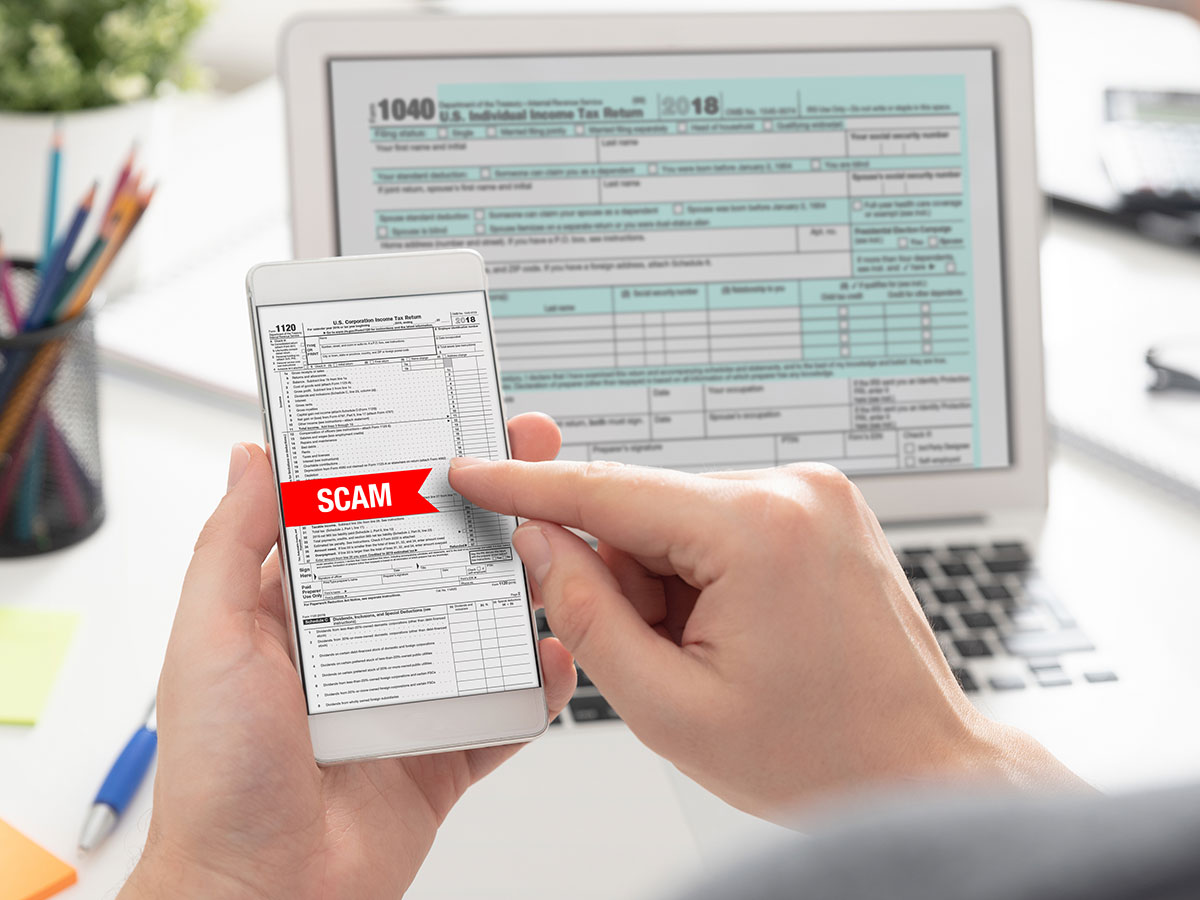
Ghost tax preparers are ramping up their activity as tax season reaches its peak, unleashing a surge of voice calls and text messages crafted to steal consumers’ financial information. With the April 15 US tax filing deadline approaching, these fraudulent ghost tax preparers along with other tax scams are targeting consumers by attempting to impersonate IRS employees, offering deceptive tax‑filing services and false promises to “file your taxes quickly” on behalf of unsuspecting taxpayers.
This growing wave of tax season fraud and identity‑theft schemes underscores the urgent need for consumers to stay vigilant and verify the legitimacy of anyone offering tax preparation services.
For Communication Service Providers (CSPs), protecting subscribers from tax-season fraud and identity-theft scams has long been a priority and must remain central to their ongoing consumer protection and fraud prevention efforts as scammers continue to evolve their tactics.
Ghost Tax Preparer & IRS Tax Scams: What CSPs Need to Know
Ghost tax preparer and IRS tax scams utilize various tactics to carry out their scam campaigns that CSPs need to be aware of so they can choose the best course of action to protect their subscribers.
- Telephone Number Spoofing
Spoofing the telephone numbers of the IRS and tax preparer agents is a common tactic used by scammers. This makes their calls appear legitimate and lures subscribers into a false sense of security. To protect subscribers, CSPs should deploy solutions that identify and block spoofed telephone numbers from making contact through their network. - AI Voice Cloning
Scammers are using AI voice cloning in their campaigns at an increasing rate, making it increasingly more difficult for subscribers to tell legitimate calls from fraudulent ones. - Smishing
Tax-related scams seen by TNS also include smishing attempts, with scammers targeting subscribers via SMS. These texts may appear to be from a legitimate number and have been reported to include threatening language and links to websites designed to steal personal information.
Ghost Tax Preparer & IRS Tax Scams: How CSPs Can Strengthen Subscriber Protection
TNS robocall data shows that in the month of March, tax related scam calls peaked in the lead up to tax season, with the following states receiving the highest volume of calls per population:
- South Carolina
- District of Columbia
- Michigan
- Alaska
- Montana
As tax‑related scams intensify every year, awareness and education remain essential, but they are more effective when paired with strong network‑level protections. For CSPs, robust fraud‑prevention measures are the most reliable way to defend subscribers at scale.
CSPs play a critical role in safeguarding consumers by deploying advanced call‑authentication and spoof‑detection technologies, proactively sharing information about emerging threats, and promoting safe user behavior during high‑risk periods like tax season.
TNS Call Guardian®, the industry’s leading reputation-profiling solution, identifies call spoofing and unwanted robocalls in real-time. By analyzing more than 1 billion call events daily, incorporating Do Not Originate (DNO), unallocated, invalid and unassigned numbers, and leveraging STIR/SHAKEN along with other data analytics, Call Guardian helps CSPs reduce the likelihood of subscribers falling prey to scam calls or texts.
Stay vigilant, share information about scams and be sure to check out our monthly Scam of the Month page updates.
John Haraburda is Product Lead for TNS Call Guardian® with specific responsibilities for TNS’ Communications Market solutions.
Call Guardian is a registered trademark for Transaction Network Services, Inc.
Prepared with assistance from AI.

Scam of the Month
Stay vigilant, share information about scams with others and be sure to check out our monthly Scam of the Month page updates.