










Friendship scams are set to become a popular method for bad actors in 2026, as they flood inboxes with messages that appear to be from someone you know but in reality, are much more sinister. Often referred to as a “pig butchering scam”, it borrows from the well-known romance scam as scammers attempt to build relationships with their targets, with the goal of stealing money from them.
What is the Friendship Scam?
In short, the friendship scam is designed to lure the target into believing that they are communicating with someone they know, before defruading the target by convincing them to ‘invest in crypto’ to send them ‘financial help’.
The friendship scam often starts with a text message, a phone call or via messaging platforms such as WhatsApp from an unknown number. The goal is to get targets to respond, so typically the message will contain a question or any tactic to make them question if you know the person or not.
How Does the Friendship Scam Work?
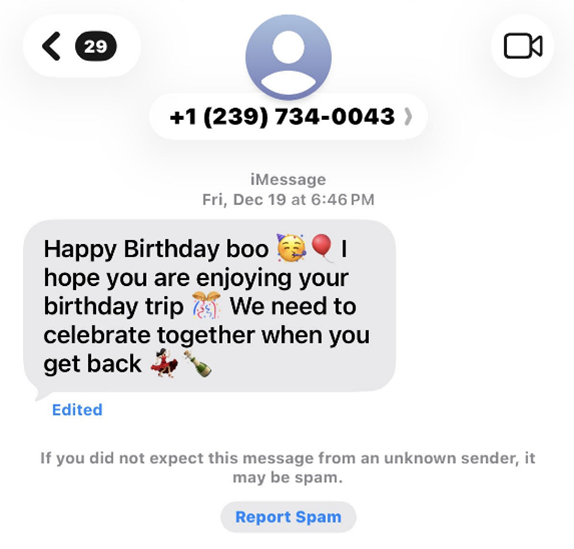
The text message above is a real-life example of the friendship scam, as received by a member of the TNS Robocall Protection team. While it may seem innocuous – in context, there are a couple of red flags:
- The message was received in December, when the recipients birthday is in April
- The area code wasn’t local to the recipient, nor did they know anyone who lived in the 239 area covering Southwest Florida
These red flags were enough on their own for the Robocall Protection Team member not to respond, however, they had previously received the text message below, which rang alarm bells.
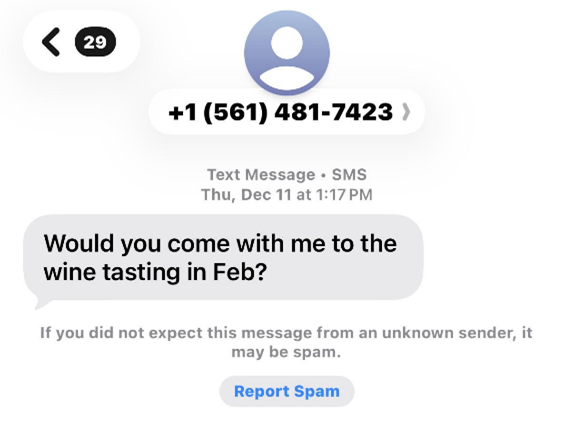
Again, the number isn’t a saved contact, however it was sent at a time when the recipient was at a Christmas Market. This raises the possibility that friendship scam bad actors may be using social media to find an ‘in’ with their targets.
Here, the bad actor is hoping that the target responds, which could open by dialogue between the two when the bad actor might be able to say they met at the market and had discussed wine tasting. From then on, as a trusting friendship is established, the requests for money begin.
How Do I Protect Myself from a Friendship Scam?
As with all scams, knowledge about scams is the first step to protect yourself from schemes such as the friendship scam. As with the romance scam and pig butchering scam, being mindful of the calls/messages that you engage with can go a long way:
- These scams will almost always come from unknown numbers to the reciever of the message; be sure to research any unknown number or ask trusted people to confirm the owner of the number before engaging. To be extra-cautious, do not engage with an unknown number
- Be alert – scammers may have found something out about you on social media, if you don’t recognize the number or if the message feels ‘off’, it is safest to ignore it
- Do not send any money or share personal information – this includes requests for money directly or through untraceable methods such as giftcards, cryptocurrency or wire transfers. These are major red flags that the person you’re engaging with is running a friendship scam.
It is best practice to never engage with unknown numbers and report phone numbers being used by scammers to your carrier. If you believe you are the victim of a scam, you can report it to your local police, state Attorney General’s office and the FTC.
Call-blocking apps, including those powered by TNS Call Guardian®, are also a great resource for reporting and blocking unwanted robocalls.
John Haraburda is Product Lead for TNS Call Guardian® with specific responsibilities for TNS’s Communications Market solutions.
Call Guardian is a registered trademark of Transaction Network Services, Inc.
Prepared with assistance from AI.

Scam of the Month
Stay vigilant, share information about scams with others and be sure to check out our monthly Scam of the Month page updates.