









Data suggests smaller carriers can deliver a superior, secure subscriber experience by moving beyond ‘minimum compliance’ efforts
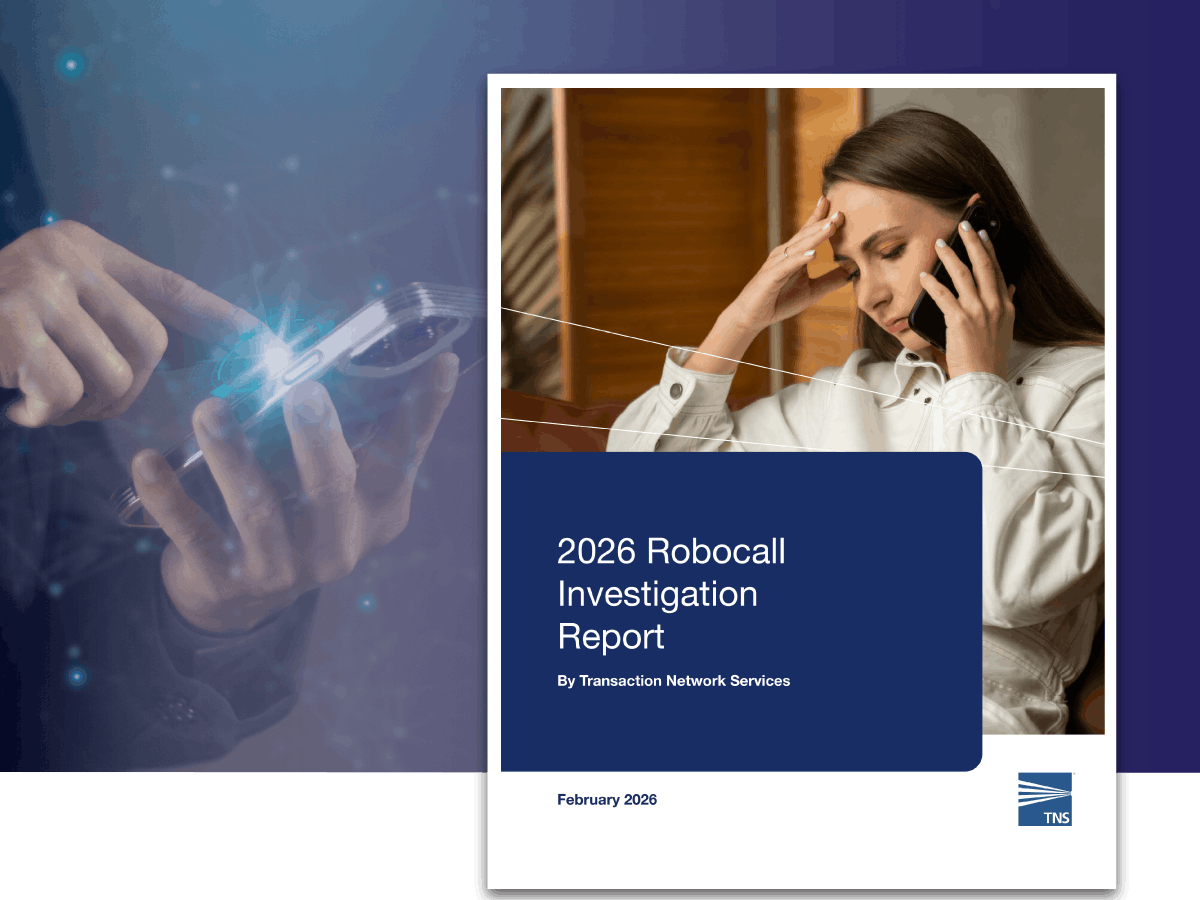
New data, released today in the Transaction Network Services’ (TNS) 2026 Robocall Investigation Report, reveals that top US telecom providers’ (Verizon, UScellular, T-Mobile, Lumen, Comcast, Charter and AT&T) robocall mitigation efforts continue to yield positive signed call traffic results. Eighty-five percent of all traffic between these Tier-1 carriers was signed in 2025, with 93% of signed traffic receiving the highest “A-level” attestation.
The Report tells a different story for smaller carriers as the percentage of all signed call traffic between these carriers was only 17.5% last year. The wide gap reflects the fact that smaller carriers are moving far slower in modernizing from legacy switched networks to IP networks, allowing bad actors to conceal their robocall campaigns within these smaller carriers.
“Successful STIR/SHAKEN implementations and proactive investments in network modernization have propelled Tier-1 carriers to a strong position in the battle against unwanted robocalls,” said Seth Walton, General Manager, TNS Communications Market. “While smaller carriers face a fundamentally different financial calculus, the progress by tier-1 carriers reflected in our Report signals that commitment to robocall mitigation beyond ‘minimal compliance’ efforts can yield tangible and sustained operational, business, and customer satisfaction benefits.”
The latest edition of TNS’s Robocall Investigation Report highlights several new robocall insights and trends to inform carriers, regulators, policymakers and the telecom industry on what to expect in 2026:
Decreased Trust in Attestation
Traceback efforts have been a critical component of STIR/SHAKEN to identify the source of unwanted calls at the point of origination. However, call spoofing, vulnerabilities in smaller carrier call signing efforts and other bad actor tactics have exposed adoption limitations of STIR/SHAKEN. The result: decreased assurance that calls signed with A-level attestation can be trusted as legitimate.
SIM box fraud is an example of how bad actors are disrupting call attestation and trust in voice calls. SIM boxing enables scammers to originate fraudulent traffic within a carrier’s trusted network, bypassing STIR/SHAKEN checks to designate fraudulent calls with A-level attestation. Invalid attestation can be addressed through a comprehensive approach to robocall mitigation that leverages call analytics engines like TNS Call Guardian, and Know Your Customer (KYC) capabilities that offer deeper visibility into call signature information.
Multimodal and AI Impersonation Scam Attacks are Increasing
Over the past year, scammers have increasingly used AI-driven and multimodal attacks to impersonate trusted brands. One high-profile example followed a ransomware attack on Kettering Health, when attackers exploited a system-wide IT outage by targeting patients with coordinated robocall and robotext scams in an attempt to steal credit card information.
Impersonation scams pose significant financial threats to Americans. Recent TNS survey data shows four out of five Americans believe imposter scams increased in 2025, and more than three-quarters (77%) of US adults say they are very concerned AI technology can be used to convincingly impersonate their voice or identity to access sensitive accounts. Furthermore, data shows more than half (54%) of Americans personally know someone who has lost money to an imposter scam.
Smaller Carriers can Balance Modernization with Cost Hurdles
Smaller carriers have historically faced legitimate barriers to network modernization due to limited bandwidth, prohibitive costs and lack of staffing for tech support. These obstacles continue to fade with the availability of industry solutions optimized for smaller carrier deployments.
TNS’s Hosted Cloud Connect, launched last month, offers ILECs, RLECs, CLECs, MSOs and other providers a fully managed service for TDM-to-IP migration that modernizes their networks and helps reduce operational costs. It offers a seamless path for smaller carriers to transition to a voice architecture that is designed to meet robocall regulatory compliance requirements and facilitate a stronger STIR-SHAKEN ecosystem.
For more information on the evolving robocall landscape, and how carriers and the broader telecom industry are fighting back against bad actors, request a copy of the 2026 TNS Robocall Investigation Report.
Discover TNS Trusted Communication Solutions
Learn how TNS Trusted Communication solutions can help businesses strengthen relationships and drive revenue.