



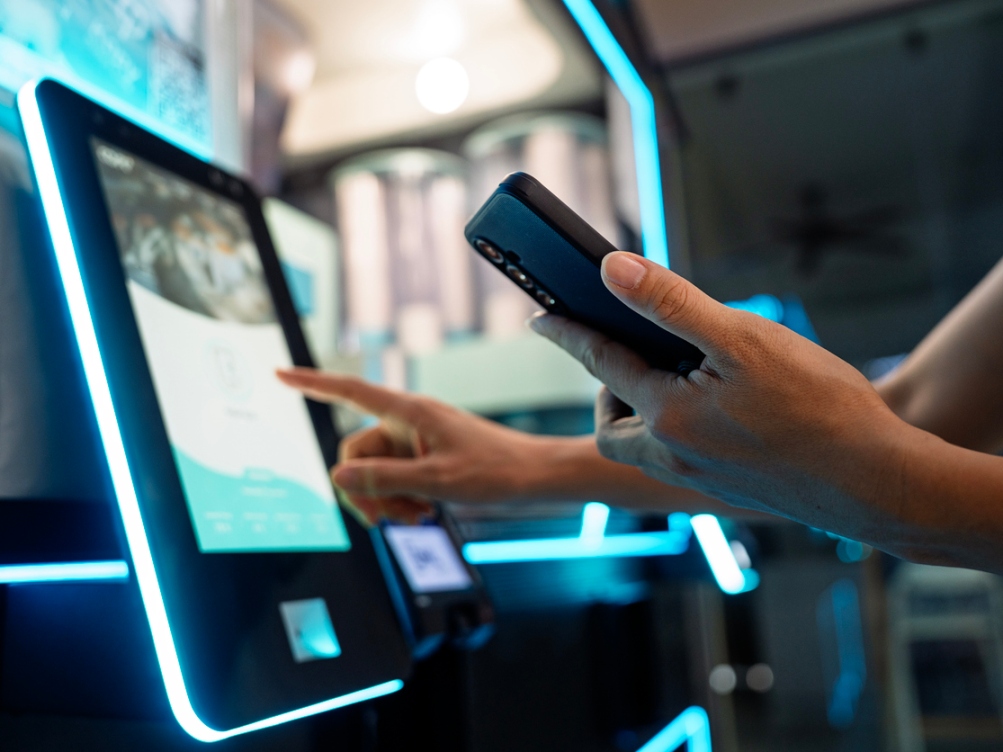







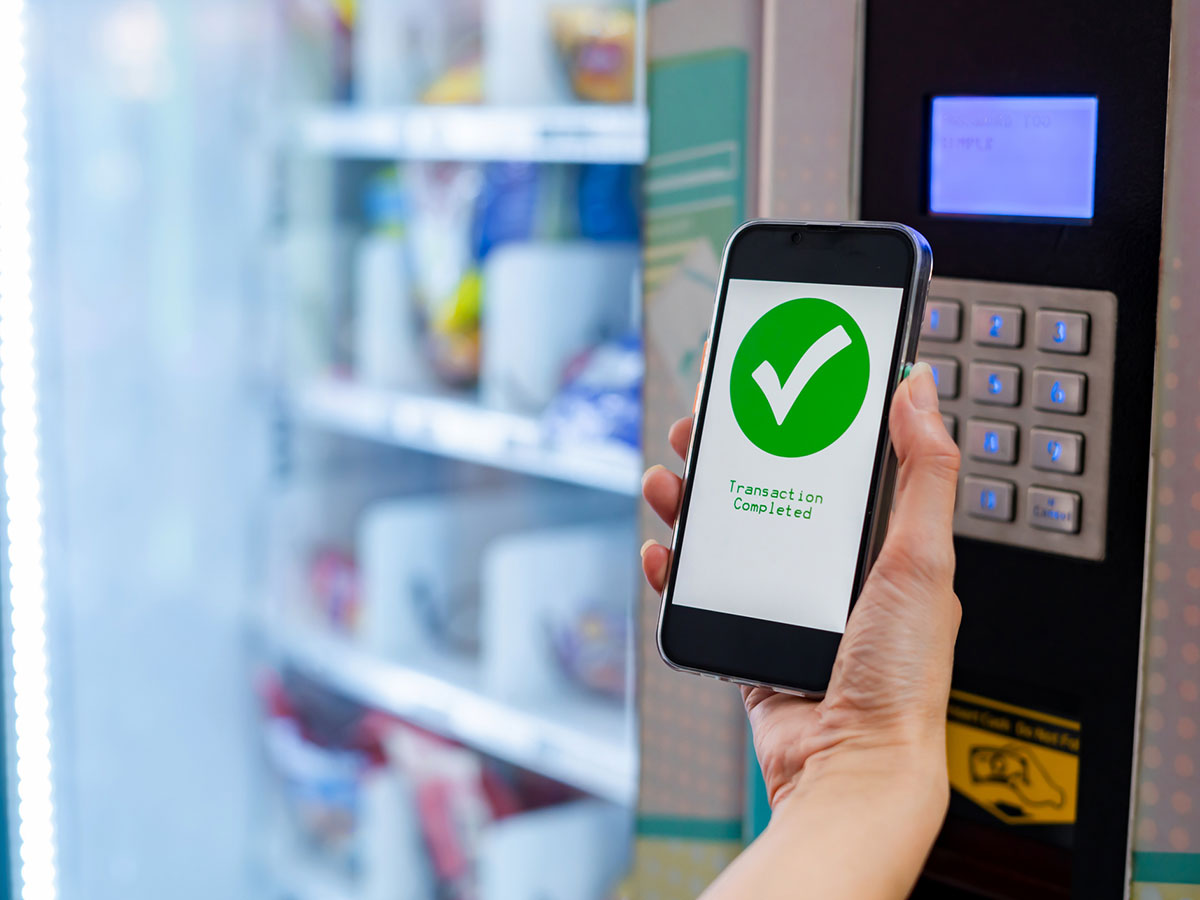
The vending industry is undergoing a profound transformation. What was once a cash-driven business is now rapidly shifting toward digital-first experiences. Consumers expect speed, convenience and security, and operators must deliver. But achieving this isn’t simple. Managing a distributed network of machines, integrating multiple payment technologies, and ensuring reliable connectivity all present significant challenges.
The Global Shift Toward Cashless
Across the globe, cashless adoption is accelerating.
- In the United States, 71% of vending machine sales are now cashless, and customers spend 37% more per transaction when paying digitally ($2.24 vs. $1.78). Contactless payments dominate, accounting for 77% of all cashless vending sales, while mobile wallet usage has surged by 300% year-on-year. At a broader retail level, 86.9% of U.S. point-of-sale transactions are cashless (Cantaloupe, 2025).
- The UK shows similar momentum. 80% of vending transactions are cashless, and more than half of those, 57% are mobile payments. Operators report up to 32% sales uplift after going fully cashless (Automatic Vending Association, 2024).
- Asia-Pacific is leading the digital wallet revolution. Over 60% of global digital wallet users are based in this region, and the market is projected to grow at a 19.8% CAGR through 2027 (Global Payments Report, Statista). In Australia, the vending market is valued at USD 3.36 billion, with cashless systems holding the largest share. Machines increasingly integrate NFC, QR codes, and 4G telemetry to meet consumer expectations (Mordor Intelligence, Euromonitor).
The key to this global shift and transformation is finding the right payment and network infrastructure that will help support the needs of a vending business and overcome the challenges they are facing including:
1. Integration: Simplifying Complexity
For operators, the challenge isn’t just adopting cashless – it’s integrating it seamlessly. Vending machines often rely on legacy MDB protocols, while modern payment systems demand compatibility with EMV, NFC, and mobile wallets. A resilient payment solution must bridge these gaps, offering plug-and-play integration with existing hardware and vending management systems. It should also consolidate multiple acquirer relationships and payment methods under one platform, reducing vendor complexity and operational overhead.
2. Security: Protecting Every Transaction
Security is paramount in unattended retail. Operators must safeguard sensitive data while meeting global compliance standards. Solutions certified to PCI DSS Level 1 provide the highest level of protection, ensuring encryption, tokenization, and fraud prevention across all payment types. Continuous monitoring through global service support centers adds another layer of assurance, reducing risk and ensuring uptime.
3. Connectivity: Helping Eliminate Downtime
Connectivity is the lifeline of modern vending. With the sunset of 3G networks, operators need robust 4G/LTE /5G connectivity and failover options to keep machines online. Real-time telemetry enables proactive maintenance, stock optimization, and proactive fault detection – preventing revenue leakage from downtime and improving customer satisfaction.
The Critical Role of Resilient Payment Systems in Business Success
The benefits are clear. In the U.S., cashless transactions average 25–37% higher than cash purchases. UK operators report 32% revenue uplift after going fully cashless. Beyond revenue, cashless systems reduce costs associated with cash handling, shrinkage, and servicing. They also future-proof operations by supporting emerging payment technologies – from digital wallets like Apple Pay and WeChat Pay to QR codes and loyalty programs.
The Road Ahead
Engineering resilient payment systems isn’t just about technology – it’s about building a foundation for growth. By investing in secure, integrated, and connected solutions, vending operators can meet evolving consumer expectations, reduce operational complexity, and unlock new revenue opportunities.
Check out our blog on 4 Essential Features every Vending Operator Should Look for in a Payments Tech Stack to explore these challenges and find the right solutions for your business.
Looking for the Right Payment and Network Partner?
TNS Complete Commerce for Vending is a flexible and scalable secure modern payment and network tech-stack, designed to enable vending operators to accept any payment on their vending machines, connect their payment machines and devices securely and process their transactions quickly and reliably.
For more information on how TNS Complete Commerce can help accelerate your vending business, contact our team.
Prepared with assistance from AI.
Ready to Simplify Your Vending Payments and Connectivity?
Bring your vending operations under one reliable partner for payments, connectivity, and support. Discover how TNS can help you increase uptime, streamline management, and deliver a better experience to every customer.