










As the telecommunications industry continues its fight against bad actors, 2025 affirmed that despite progress in curbing robocall volume, bad actors remain highly adaptive and capable of exploiting any weakness in operators’ networks.
STIR/SHAKEN fortified Tier-1 operator networks, but fraudsters continue to exploit gaps in call-signing protocols, deploying multi-pronged attacks that combine voice and text scams targeting carriers, subscribers and enterprise customers.
These scams, buoyed by generative AI, have become increasingly realistic and effective, forcing the telecom industry’s hand in adopting AI-driven solutions to combat scammers. As both sides fine-tune their use of the technology, the fight between fraudsters and the telecom industry continues to play out on an ever-shifting battlefield.
Based on TNS’s analysis of more than 1.5 billion daily call events from over 500 operators, and close collaboration with the top US carriers to combat fraud and scams and restore trust in voice calling, there are five notable takeaways from 2025 to help guide all telecom stakeholders in 2026.
Carriers, Industry Addressing STIR/SHAKEN Gaps
The STIR/SHAKEN call-signing protocols represent an important attempt to authenticate calls between operators and eliminate illegal robocall traffic. Encouragingly, it’s anticipated that over 90% of call traffic between top carriers will have been signed with “A-level” attestation in 2025, a strong indicator that most Tier-1 operators have successfully implemented STIR/SHAKEN between originating and terminating parties, making it more difficult for bad actors to leverage these networks to launch their attacks.
However, invalid attestation remains a challenge as spam calls continue to appear with improperly signed levels. TNS continues to observe bad actors who find network providers with poor KYC (know your customer) practices, enabling these bad actors to spread a low volume of calls across a very large number of telephone numbers, often with A level attestation, in an attempt to avoid spam filter detection.
This development underscores the current limitations of STIR/SHAKEN and provides an opening for robocall fraudsters. Further compounding the issue is that many smaller carrier networks have not fully migrated to all-IP systems. Their legacy TDM infrastructure and gateway providers that utilize TDM create openings for robocall traffic to drop STIR/SHAKEN parameters, leaving the identity of who signed the originating call unknown. In fact, when studying all traffic that terminates to Tier 1 carrier networks, less than 80% of it is signed with A level attestation.
Carriers and the telecom industry were proactive in addressing these STIR/SHAKEN gaps throughout the year in several key ways:
- Expanding branded calling initiatives: Industry partnerships with leading wireless carriers broadened end-to-end call authentication with solutions that complement STIR/SHAKEN, ensuring more verified calls were delivered with rich call content designed to engage consumers along with anti-spoof solutions to prevent spoofing.
- Supporting smaller network modernization: Telecom organizations continued collaborating with smaller carriers to accelerate network transformation efforts, increasing SIP-to-SIP connectivity and extending the reach of authenticated call flows.
- State Attorneys General step up enforcement: Operation Robocall Roundup, a multistate initiative formed by 50 Attorney Generals led by all 50 state attorneys general to stop illegal robocalls, targeted 37 voice providers accused of violating Federal Communications Commission (FCC) rules and failing to stop illegal calls being routed from being routed through their networks.
Bad Actors Deploy Multi-pronged Attacks
Robocall bad actors remained nimble in 2025, as integrated scams surged—often beginning with a text message that appeared legitimate before being followed by a phone call.
The hybrid approach provides scammers with a stronger veil of legitimacy. The goal of these attacks is to collect personal information, such as Social Security numbers, Medicare IDs, or other data, to expand fraudsters’ profile and enable them to steal more easily from Americans. These multifaceted campaigns often attempt to seize on chaos and confusion, creating a sense of urgency for the target.
This was evident in the recent scam flagged by the Social Security Administration’s Office of the Inspector General. Bad actors launched this impersonation scam by forging letters on fake US Supreme Court letterhead claiming that recipients were suspects in criminal investigations before targeting them with phone calls as well.
Another example was the ransomware attack by the group Interlock on Kettering Health earlier this year. Interlock took advantage of the ransomware chaos by impersonating Kettering Health team members and requesting credit card payments for medical expenses through robocalls and robotexts.
Rising Concerns About Inbound Voice Attacks
Historically, bad actors have hijacked enterprises’ outbound communication channels to target customers. However, throughout the year, scammers targeted contact centers’ inbound voice channels, exploiting their vulnerability to AI-generated voice attacks, impostor calls, and interactive voice response (IVR) mining.
AI-generated voice synthesis enables fraudsters to mimic legitimate customer voices, confusing call center agents. Meanwhile, IVR mining allows attackers to analyze automated system behavior before launching targeted attacks.
To counter this, many enterprise contact centers bolstered their defenses, deploying voice biometrics, real-time call verification, and behavioral analytics to detect synthetic speech patterns and prevent scams before they reach agents.
AI vs AI Remains a Battle Without a Clear Victor
Throughout the telecom landscape, artificial intelligence has rapidly become both an enabler of fraud and a frontline defense mechanism. Bad actors are leveraging transformers and neural network architectures to refine fake voices, improving their smoothness, cadence, and localization, while sophisticated sampling of diverse voice datasets has allowed synthetic speech to sound increasingly authentic, challenging even advanced detection tools.
Telcos and industry partners are developing and deploying AI-powered detection systems that leverage the same advancements to identify spoofed calls, detect anomalies in call patterns and flag synthetic voice signatures with growing accuracy.
This reflects the ongoing “cat and mouse” dynamic in 2025 between robocall bad actors and the telecom industry. Each time bad actors strengthen their scams, the telecom industry finds new ways to deploy AI to thwart them.
Top Scams of 2025
The past year also saw a surge in scams exploiting economic distress, particularly among individuals struggling with debt. Fraudsters targeted consumers through robocalls that promised immediate debt relief, cash advances, or loan forgiveness—preying on emotions and emphasizing false urgency to provoke quick action.
Throughout the year, bad actors continued to evolve their methods, employing multi-pronged attacks that combine robocalls and robotexts. These schemes are planned, scripted, and rehearsed to appear legitimate. Once criminals obtain initial personal information, they often merge it with data from other breaches or public sources to enhance credibility in future scams.
Additionally, impersonation scams remain a major threat to both consumers and businesses. This year, scammers not only used generative AI to convincingly pose as legitimate companies in order to defraud Americans, but also increasingly impersonated consumers themselves to deceive and exploit businesses directly.
Looking Ahead to 2026
The 2025 robocall landscape demonstrated that while STIR/SHAKEN has been effective in limiting the overall unwanted robocall volume, it was never meant to be a silver bullet that eliminated robocalls altogether. As bad actors continue to leverage new scams to target Americans, telecom industry leaders must equip themselves with AI-powered solutions that facilitate industry-wide collaboration, data sharing, and scam education to reinforce trust in the voice channel.
Find out how TNS is helping restore trust to voice calls at https://tnsi.com/solutions/communications/
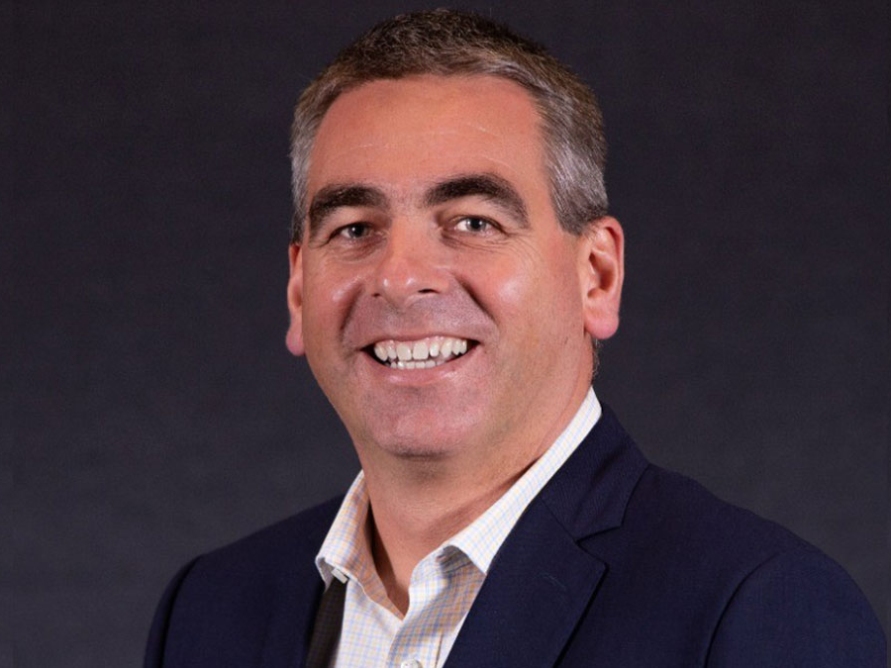
Paul Florack is Vice President of Product Management at TNS with specific responsibility for TNS’s Communications Market.

Scam of the Month
Stay vigilant, share information about scams with others and check out our Scam of the Month page updates.